


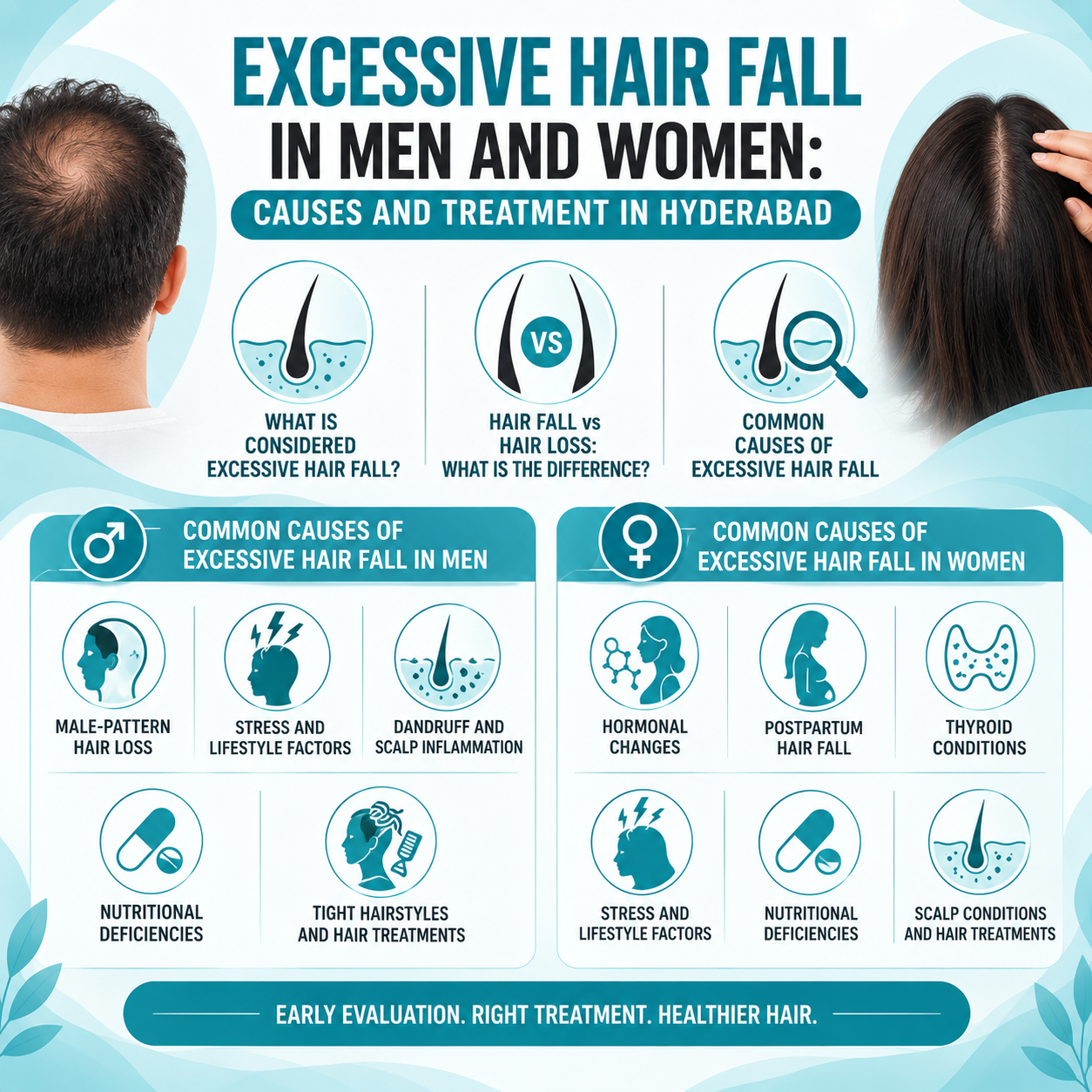
Excessive Hair Fall in Men and Women: Causes and Treatment in Hyderabad
Finding more hair than usual on your pillow, comb or bathroom floor can be worrying. Although some daily hair shedding is normal, a sudden increase in hair fall, visible scalp, widening hair part or receding hairline may indicate an underlying concern.
Excessive hair fall can affect both men and women, but its causes and patterns may differ. Genetics, hormonal changes, stress, nutritional deficiencies, scalp conditions, illness and damaging hair-care practices can all influence the hair-growth cycle.
People looking for professional Hair Fall Treatment in Hyderabad can visit Romaa Hair & Skin Care for a detailed hair and scalp evaluation.
Romaa Hair & Skin Care provides personalised hair-loss care through its clinics in Hyderabad and Vijayawada, based on the cause, severity and pattern of each patient's condition.
What Is Considered Excessive Hair Fall?
Hair naturally moves through growth, transition, resting and shedding phases. It is generally normal to lose approximately 50 to 100 hairs per day.
However, when significantly more hair enters the shedding phase, a person may begin noticing excessive hair on the pillow, floor, comb or during washing.
Dermatologists distinguish between excessive hair shedding and actual hair loss. Some patients may experience one condition, while others may experience both.
Excessive hair fall may be suspected when you notice:
- Large amounts of hair while washing
- Hair collecting on your pillow
- Increased shedding during combing
- Noticeably reduced hair volume
- A widening centre part
- A thinner ponytail
- Increasing scalp visibility
- Recession around the forehead or temples
- Round or irregular bald patches
A professional diagnosis is important because temporary shedding and progressive hair loss require different approaches.
Hair Fall vs Hair Loss: What Is the Difference?
Although people frequently use these terms interchangeably, hair fall and hair loss may refer to different problems.
Excessive Hair Shedding
Excessive hair shedding can occur when more follicles than usual enter the resting phase of the hair-growth cycle.
This may happen after:
- Severe physical stress
- Emotional stress
- High fever
- Major illness
- Surgery
- Childbirth
- Sudden weight loss
- Restrictive dieting
- Major lifestyle changes
This type of shedding is often called telogen effluvium. Depending on the cause, it may improve once the triggering factor is identified and addressed.
Progressive Hair Loss
Hair loss occurs when hair follicles stop producing healthy strands, become progressively smaller or are damaged by a genetic, hormonal, autoimmune, medical or inflammatory condition.
Common early signs include gradual thinning, a slowly growing bald area, a receding hairline, widening of the hair part and reduced ponytail thickness.
Common Causes of Excessive Hair Fall in Men
Men commonly experience hair fall because of genetic factors, lifestyle influences, scalp conditions or medical concerns.
1. Male-Pattern Hair Loss
Male-pattern hair loss, medically known as androgenetic alopecia, is one of the most common causes of progressive hair thinning in men.
It may begin with:
- Recession at the temples
- An M-shaped hairline
- Thinning over the crown
- Reduced density on the top of the scalp
- Gradual development of bald areas
Hereditary pattern hair loss generally develops gradually. In men, it often appears as a receding hairline or bald areas.
2. Stress and Lifestyle Factors
Emotional stress, inadequate sleep, major illness, surgery and sudden changes in body weight can disrupt the normal hair-growth cycle.
Increased shedding may begin several weeks or months after the triggering event.
3. Dandruff and Scalp Inflammation
Persistent dandruff, itching, redness and scalp inflammation may weaken the scalp environment and increase hair breakage or shedding.
Aggressive scratching can also damage fragile hair strands.
4. Nutritional Deficiencies
Inadequate protein intake, restrictive diets and deficiencies involving nutrients such as iron, vitamin D, vitamin B12 or zinc may contribute to increased shedding in some patients.
Supplements should not be started randomly. Taking excessive amounts of certain nutrients may worsen hair loss rather than improve it.
5. Tight Hairstyles and Hair Treatments
Men who regularly wear tight hairstyles, use harsh chemical products or expose their hair to excessive heat may experience breakage or traction-related thinning.
6. Medicines and Health Conditions
Certain medicines and medical conditions can influence hair growth. Patients should not stop prescribed medication without speaking to their doctor.
Common Causes of Excessive Hair Fall in Women
Women may develop excessive shedding or thinning due to hormonal, genetic, nutritional, medical and lifestyle-related factors.
1. Female-Pattern Hair Loss
Female-pattern hair loss usually develops gradually.
Common signs include:
- A widening centre part
- Thinning over the crown
- Reduced overall volume
- A thinner ponytail
- Increased scalp visibility
Unlike the typical receding hairline seen in many men, women often retain their frontal hairline while experiencing diffuse thinning across the top of the scalp.
2. Hormonal Changes
Hormonal changes associated with pregnancy, childbirth, menopause, thyroid disorders and conditions such as polycystic ovary syndrome may affect hair growth.
Hormonal imbalance can contribute to scalp thinning in women, and treatment may help when the underlying cause is identified.
3. Postpartum Hair Shedding
Many women notice increased shedding a few months after childbirth. This is commonly associated with hormonal changes and is often a temporary form of excessive shedding rather than permanent hair loss.
Professional advice may be useful when postpartum hair fall is severe, continues for a long period or causes visible thinning.
4. Iron or Nutritional Deficiency
Heavy menstrual bleeding, restrictive diets, sudden weight loss and inadequate nutrition may increase the risk of certain deficiencies that affect hair growth.
A dermatologist may recommend appropriate investigations when a deficiency is suspected.
5. Heat Styling and Chemical Damage
Frequent straightening, curling, bleaching, colouring or chemical smoothing may weaken the hair shaft and lead to breakage.
Hair breakage may appear similar to hair fall, but the treatment approach can differ.
6. Tight Hairstyles
Regular use of tight ponytails, braids, buns or extensions may place repeated tension on the roots.
Over time, this may contribute to traction alopecia, especially around the frontal hairline and temples.
7. Stress and Illness
Severe stress, surgery, fever, illness or sudden changes in body weight can trigger temporary shedding in women.
Medical Conditions That Can Affect Both Men and Women
Alopecia Areata
Alopecia areata is an immune-related condition that may cause sudden, smooth and clearly defined bald patches on the scalp, beard, eyebrows or other areas.
Thyroid-Related Conditions
Both an overactive and underactive thyroid may affect the hair-growth cycle and contribute to diffuse thinning.
Scalp Infections
Fungal or bacterial scalp infections may cause scaling, inflammation, broken hair or patchy hair loss.
Telogen Effluvium
Telogen effluvium can cause diffuse shedding after stress, illness, childbirth, surgery or another major physical change.
Scarring Hair Loss
Certain inflammatory conditions may damage the follicles and cause permanent hair loss.
Early diagnosis is particularly important when hair fall is associated with pain, burning, redness, scaling or smooth areas of scalp without visible follicle openings.
When Should You Consult a Hair Specialist?
You should consider professional evaluation when you experience:
- Sudden or severe hair shedding
- Hair fall that continues for several weeks
- A widening hair part
- A receding hairline
- Progressive crown thinning
- Round or patchy bald spots
- Loss of eyebrow, eyelash or beard hair
- Scalp pain, burning or redness
- Severe dandruff or scaling
- Pus-filled bumps or sores
- Visible reduction in hair density
- Hair loss after starting a new medicine
- Hair fall that affects your confidence
Sudden or patchy hair loss, or noticeably increased shedding during washing and combing, can sometimes indicate an underlying condition that requires medical attention.
How Is Excessive Hair Fall Diagnosed?
Effective treatment begins with identifying the cause.
During a consultation at Romaa Hair & Skin Care, the clinical evaluation may include questions about:
- When the hair fall started
- Whether the problem is sudden or gradual
- Family history of hair loss
- Recent fever, illness or surgery
- Emotional stress
- Pregnancy or childbirth
- Menstrual or hormonal changes
- Diet and recent weight loss
- Existing medical conditions
- Medicines and supplements
- Hair-care habits
- Previous hair treatments
- Dandruff, itching or scalp discomfort
The scalp may then be examined for:
- Hair-loss pattern
- Hairline recession
- Crown thinning
- Centre-part widening
- Bald patches
- Hair density
- Hair-shaft breakage
- Scaling or inflammation
- Donor-area strength where relevant
Depending on the patient's symptoms, the specialist may recommend blood investigations, a hair-pull test, scalp examination or other diagnostic procedures.
Excessive Hair Fall Treatment at Romaa Hair & Skin Care
There is no single treatment that is suitable for every patient. The right option depends on the cause, stage, pattern and severity of hair loss.
At Romaa Hair & Skin Care Hyderabad and Vijayawada, treatment recommendations are personalised after evaluating the patient's scalp, follicles, medical history and treatment goals.
Medical Hair-Loss Management
Medical management may be recommended to:
- Reduce excessive shedding
- Support healthier hair growth
- Control pattern hair loss
- Treat scalp inflammation
- Manage dandruff
- Address an identified deficiency
- Stabilise progressive thinning
Any medication used for hair loss should be recommended and monitored by a qualified medical professional.
PRP Hair Treatment
Platelet-rich plasma treatment may be considered for selected patients with certain types of hair thinning.
The procedure uses a processed component of the patient's own blood, which is administered into targeted areas of the scalp under medical supervision.
Suitability depends on factors such as:
- Type of hair loss
- Stage of thinning
- Follicle condition
- Medical history
- Current scalp health
- Patient expectations
GFC Hair Treatment
Growth Factor Concentrate treatment may be recommended for suitable patients experiencing thinning or hair fall.
The number and frequency of sessions vary according to the patient's condition and treatment plan.
Bio PRP
Bio PRP may be considered as part of a personalised hair-restoration approach for selected candidates.
A professional assessment is necessary to determine whether the procedure is appropriate.
Hair Mesotherapy
Mesotherapy may be discussed in selected cases depending on the diagnosis, scalp condition and individual treatment needs.
It should not be considered a universal solution for every type of hair loss.
Anti-Dandruff and Scalp Treatment
When excessive hair fall is associated with dandruff, itching or scalp inflammation, treating the scalp condition may be an important part of the overall plan.
Targeted scalp care can help manage:
- Flaking
- Itching
- Excess oil
- Redness
- Inflammation
- Scalp discomfort
Hair Transplantation
Hair transplantation may be considered for suitable men and women with established hair loss and adequate donor hair.
A detailed transplant consultation assesses:
- Pattern and stage of hair loss
- Donor-hair availability
- Scalp health
- Age and medical history
- Possible future hair loss
- Realistic density expectations
Hair transplantation is generally not appropriate for temporary shedding caused by stress, illness or nutritional deficiency.
Why Personalised Treatment Is Important
Two people may have similar-looking hair fall but completely different underlying causes.
For example:
- One man may have hereditary crown thinning.
- Another may have stress-related shedding.
- One woman may have postpartum hair fall.
- Another may have female-pattern hair loss.
- Another patient may have alopecia areata.
- Someone else may have scalp inflammation or nutritional deficiency.
Using the same treatment for every person may delay appropriate care. A diagnosis-based plan is therefore more important than choosing a procedure based only on advertisements or online recommendations.
Hair-Care Tips for Men and Women
Professional treatment may be supported by gentle and consistent hair-care practices.
Eat a Balanced Diet
Include adequate protein, vegetables, fruits, whole grains and nutrient-rich foods. Follow medical advice when a deficiency has been identified.
Avoid Random Supplements
Do not take high-dose hair supplements without proper evaluation. More is not always better.
Reduce Excessive Heat Styling
Limit straighteners, curling tools and high-temperature blow-drying.
Avoid Tight Hairstyles
Choose hairstyles that do not repeatedly pull on the roots or hairline.
Handle Wet Hair Gently
Avoid forceful brushing, twisting or towel rubbing when the hair is wet.
Manage Stress and Sleep
Adequate sleep, exercise and healthy stress-management practices may support overall well-being.
Follow the Treatment Consistently
Hair growth is gradual. Frequently changing products or stopping treatment early may make progress difficult to evaluate.
Why Choose Romaa Hair & Skin Care?
Patients seeking professional care for excessive hair fall need accurate evaluation, personalised guidance and realistic expectations.
At Romaa Hair & Skin Care, patients can receive:
- Detailed hair and scalp assessment
- Dermatologist-guided care
- Personalised treatment planning
- Medical hair-loss management
- PRP, GFC and Bio PRP options for suitable candidates
- Mesotherapy where clinically appropriate
- Dandruff and scalp-care solutions
- Hair-transplant consultation
- Follow-up guidance
Romaa Hair & Skin Care provides its hair and skin-care services through clinics in Hyderabad and Vijayawada.
Patients in Hyderabad can visit the Madhapur or Banjara Hills branches, while patients in Andhra Pradesh can consult the team at the Vijayawada branch.
Consult Romaa Hair & Skin Care for Excessive Hair Fall
Excessive hair fall in men and women should not be treated with the same generic solution. The cause may involve genetics, hormones, stress, nutrition, scalp health or an underlying medical condition.
An early consultation can help identify whether you have temporary shedding, progressive pattern hair loss, alopecia areata, scalp inflammation or another concern.
For professional evaluation and personalised hair-loss care, book a consultation with Romaa Hair & Skin Care Hyderabad or Vijayawada.
A diagnosis-based approach can help you understand the cause of your hair fall and choose the most appropriate next step for your hair and scalp health.
Book Consultation
Common Questions
Frequently Asked Questions About Excessive Hair Fall
Learn more about excessive hair shedding in men and women, possible causes and diagnosis-based treatment options.
Losing approximately 50 to 100 hairs per day is generally considered normal. Hair fall may require evaluation when shedding increases noticeably or causes visible thinning.
Common causes include male-pattern hair loss, stress, illness, nutritional deficiencies, scalp conditions, tight hairstyles and certain medicines.
Female-pattern hair loss, pregnancy, childbirth, menopause, hormonal conditions, nutritional deficiencies, stress, illness and chemical hair damage may contribute to excessive shedding.
Yes. Severe physical or emotional stress may disrupt the hair-growth cycle and cause increased shedding several weeks or months later.
The outcome depends on the cause. Temporary shedding may improve after the trigger is addressed, while hereditary or chronic hair loss may require ongoing management.
There is no single best treatment for everyone. The appropriate solution depends on the diagnosis, severity, pattern of hair loss and condition of the follicles.
Patients can visit Romaa Hair & Skin Care at its Madhapur or Banjara Hills branches for professional hair and scalp evaluation.
Yes. Romaa Hair & Skin Care also provides hair and skin consultations and treatments through its Vijayawada branch.
Medical Disclaimer
This blog is intended for general education and awareness only. It should not replace diagnosis, consultation or treatment from a qualified medical professional.
