


Hair Fall vs Hair Loss: When to Visit a Hair Specialist in Hyderabad
Noticing hair on your pillow, comb or bathroom floor can be stressful. However, a certain amount of daily hair shedding is part of the natural hair-growth cycle. The real concern begins when hair fall becomes excessive, continues for several weeks or causes visible thinning, bald patches or changes in the hairline.
Understanding the difference between normal hair fall and progressive hair loss can help you seek professional care at the right time. Consulting an experienced Hair Specialist in Hyderabad can help determine the underlying cause and identify a treatment approach suited to your condition.
At Romaa Hair & Skin Care, patients receive personalised hair and scalp evaluations based on their symptoms, medical history, hair-loss pattern and individual needs.
What Is Normal Hair Fall?
Hair naturally passes through growth, transition, resting and shedding phases. It is generally normal for a person to shed approximately 50 to 100 hairs per day.
A dermatologist can help determine whether a person is experiencing ordinary shedding or a form of hair loss.
Normal shedding may be more noticeable while:
- Washing your hair
- Brushing or combing
- Removing a hair tie
- Drying your hair
- Waking up in the morning
A few hairs on your pillow or comb do not necessarily indicate permanent hair loss. However, you should pay attention when the amount of hair increases suddenly or when your scalp becomes more visible.
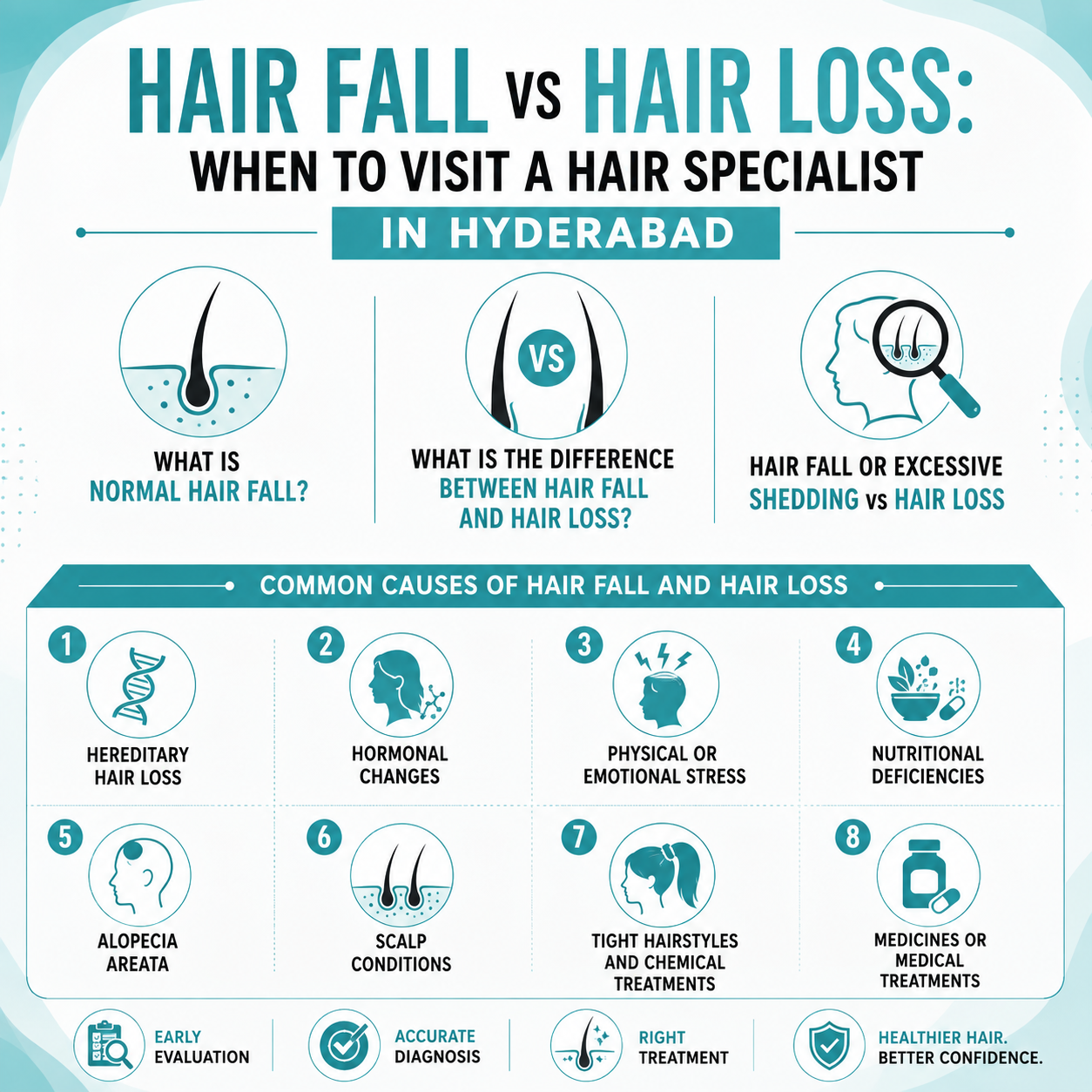
What Is the Difference Between Hair Fall and Hair Loss?
Although the terms are often used interchangeably, hair fall and hair loss may refer to different conditions.
Hair Fall or Excessive Shedding
Excessive hair shedding can occur when a larger number of hair follicles enter the resting phase at the same time. This condition is often associated with physical stress, emotional stress, illness, surgery, childbirth or sudden weight loss.
People may notice increased shedding a few months after recovering from an illness, undergoing surgery or giving birth. In many cases, normal hair fullness may gradually return within six to nine months after the excessive shedding stops.
Hair Loss
Hair loss occurs when hair follicles stop producing healthy hair, become progressively smaller or are affected by a genetic, hormonal, autoimmune, medical or scalp-related condition.
Hair loss may appear as:
- A widening centre part
- Gradual thinning at the crown
- A receding hairline
- Reduced ponytail thickness
- Round or patchy bald spots
- Increased scalp visibility
- Loss of eyebrow or beard hair
Because different types of hair loss require different treatments, identifying the exact cause is important before starting medication or procedures.
Common Causes of Hair Fall and Hair Loss
Hair loss does not have one single cause. An evaluation by a qualified Hair Specialist in Hyderabad can help identify whether your condition is temporary, progressive or related to an underlying health concern.
1. Hereditary Hair Loss
Genetic or pattern hair loss is one of the most common causes of gradual thinning. It may appear as a receding hairline or crown thinning in men and widening of the centre part or overall thinning in women.
2. Hormonal Changes
Pregnancy, childbirth, menopause and thyroid-related conditions may influence the hair-growth cycle. These changes can result in temporary shedding or progressive thinning.
3. Physical or Emotional Stress
Severe illness, surgery, high fever, emotional stress or sudden lifestyle changes may trigger excessive hair shedding. The shedding may begin several weeks or months after the stressful event.
4. Nutritional Deficiencies
Deficiencies involving iron, protein, vitamin D or other nutrients may affect healthy hair growth. However, supplements should not be taken unnecessarily without medical evaluation or appropriate testing.
5. Alopecia Areata
Alopecia areata is an immune-related condition that can cause sudden, round or patchy areas of hair loss on the scalp or other parts of the body.
6. Scalp Conditions
Persistent dandruff, scalp inflammation, fungal infections and certain skin conditions may cause itching, scaling, irritation, breakage or hair loss.
7. Tight Hairstyles and Chemical Treatments
Frequently wearing hairstyles that pull tightly on the hair can contribute to traction alopecia. Excessive heat, harsh chemical treatments and rough handling can also weaken the hair shaft and increase breakage.
8. Medicines or Medical Treatments
Some medicines and medical treatments may contribute to temporary or persistent hair loss. Any suspected medicine-related hair loss should be discussed with the prescribing doctor rather than stopping medication without advice.
When Should You Visit a Hair Specialist in Hyderabad?
Occasional shedding may not require treatment. However, professional evaluation is recommended when hair fall becomes persistent or is accompanied by visible changes.
Sudden Excessive Hair Fall
Consult a specialist when large amounts of hair begin falling suddenly while washing, brushing or touching your hair.
A Widening Hair Part
A centre part that appears wider than before may be an early sign of progressive thinning, especially in women.
A Receding Hairline
Hairline recession around the temples or forehead may indicate pattern hair loss and should be evaluated before it progresses further.
Round or Patchy Bald Spots
Sudden smooth, round or oval bald patches may be associated with alopecia areata or another condition requiring medical assessment.
Visible Scalp or Reduced Density
When your scalp becomes more visible under normal lighting or your ponytail feels noticeably thinner, it may be time to consult a Hair Specialist in Hyderabad.
Persistent Itching or Scalp Irritation
Hair fall accompanied by redness, itching, pain, scaling, sores or severe dandruff may indicate an underlying scalp condition.
Hair Fall Lasting Several Months
Temporary shedding may settle over time, but continuing hair fall should be evaluated to rule out nutritional, hormonal, genetic or medical causes.
Loss of Eyebrow, Eyelash or Beard Hair
Hair loss affecting areas beyond the scalp may require a dermatologist's evaluation.
Why Is Early Diagnosis Important?
Early diagnosis can help distinguish temporary hair shedding from progressive or potentially permanent hair-loss conditions.
Some forms of hair loss may respond better when treatment begins early. Delaying evaluation while relying only on oils, home remedies or over-the-counter products may allow progressive thinning to continue.
A dermatologist or hair specialist can assess the pattern of loss, examine the scalp and determine whether the follicles are active, weakened, inflamed or damaged.
The most effective treatment depends on identifying the correct cause rather than using the same treatment for every patient.
How Does a Hair Specialist Diagnose Hair Loss?
A consultation usually begins with a detailed discussion about:
- When the hair fall started
- Whether it is sudden or gradual
- Recent illness, surgery or stress
- Pregnancy or childbirth
- Diet and weight changes
- Current medicines and supplements
- Family history of hair loss
- Hair-care practices
- Scalp itching, dandruff or irritation
The specialist may examine the scalp, hairline, crown, centre part and overall hair density. Depending on the symptoms, additional evaluation may include a hair-pull test, blood tests or other diagnostic procedures.
Blood tests may help identify medical conditions associated with hair loss, while physical examination and medical history help the doctor determine the likely cause.
Hair-Loss Treatments at Romaa Hair & Skin Care
Treatment for hair loss should always be based on the diagnosis. At Romaa Hair & Skin Care, the medical team first evaluates the condition before recommending a personalised treatment plan.
Depending on the cause, severity and condition of the hair follicles, treatment options may include:
Medical Hair-Loss Management
Medical treatment may be recommended to control hair fall, support hair growth or manage an underlying scalp condition. Medicines should be used only under professional supervision.
Hair PRP Treatment
Platelet-rich plasma treatment may be considered for selected patients. It involves using components derived from the patient's blood and administering them into the scalp under medical supervision.
GFC Treatment
Growth Factor Concentrate treatment may be recommended for suitable candidates based on the type and stage of hair loss.
Bio PRP
Bio PRP may be discussed as part of a personalised regenerative hair-treatment plan when clinically appropriate.
Mesotherapy
Hair mesotherapy may be considered in selected cases following a detailed scalp and hair assessment.
Anti-Dandruff Treatment
Patients with dandruff, scalp irritation or inflammation may require targeted scalp treatment before or alongside hair-loss management.
Hair Transplantation
Hair transplantation may be considered for suitable patients with established hair loss and adequate donor hair. A detailed consultation is necessary to determine candidacy and set realistic expectations.
Not every patient needs a procedure. The appropriate option depends on the diagnosis, medical history, age, pattern of hair loss and health of the hair follicles.
Why Choose Romaa Hair & Skin Care?
People searching for a trusted Hair Specialist in Hyderabad require more than a temporary solution. They need proper diagnosis, personalised recommendations and medically guided treatment.
At Romaa Hair & Skin Care, the focus is on understanding the root cause of hair fall before recommending treatment.
Patients can expect:
- Detailed hair and scalp evaluation
- Personalised treatment planning
- Dermatologist-guided care
- Modern hair-treatment options
- Clear explanation of the condition
- Recommendations based on individual needs
- Follow-up guidance throughout the treatment journey
Romaa Hair & Skin Care serves patients through its Hyderabad branches in Madhapur and Banjara Hills, along with its Vijayawada branch.
Avoid Self-Treatment for Persistent Hair Fall
Changing shampoos, applying different oils or taking random supplements may not address the real cause of hair loss.
Avoid:
- Starting hair-loss medicines without medical advice
- Taking high-dose vitamins without confirmed deficiency
- Applying harsh products to an irritated scalp
- Frequently changing treatments
- Selecting procedures without proper diagnosis
- Expecting immediate results
Hair growth is a gradual process. Treatment results vary depending on the cause, severity, consistency and condition of the hair follicles.
Consult a Hair Specialist at Romaa Hair & Skin Care
Hair fall may be temporary, but persistent thinning, bald spots, scalp irritation or a receding hairline should not be ignored.
Consulting a qualified Hair Specialist in Hyderabad can help you understand the reason behind your hair loss and determine the right next step.
At Romaa Hair & Skin Care, patients receive professional hair and scalp assessment followed by a personalised treatment approach. Early evaluation may help control further hair loss and improve the chances of achieving better treatment outcomes.
Book a consultation with Romaa Hair & Skin Care in Madhapur or Banjara Hills and take an informed step towards healthier hair and scalp.
Book Consultation
Common Questions
Frequently Asked Questions
Common questions about hair fall, hair loss, scalp concerns and consulting a hair specialist.
Shedding approximately 50 to 100 hairs per day is generally considered normal. However, sudden increases in shedding or visible thinning should be professionally evaluated.
Consult a specialist when hair fall continues for several weeks, becomes excessive or causes thinning, bald patches, hairline recession or scalp symptoms.
Yes. Physical or emotional stress can disrupt the hair-growth cycle and contribute to excessive shedding. Hair fall may begin weeks or months after the stressful event.
Severe dandruff and scalp inflammation may contribute to itching, scratching, breakage and increased shedding. Persistent dandruff should be assessed by a qualified professional.
Some types of hair loss may be controlled, slowed or improved, while others require ongoing management. The likely outcome depends on the cause, duration, severity and condition of the follicles.
A dermatologist is trained to diagnose and treat conditions involving the skin, scalp, hair and nails. Patients may consult a qualified dermatologist or medically supervised hair specialist.
Patients can visit Romaa Hair & Skin Care at its Madhapur or Banjara Hills branches for a professional hair and scalp consultation.
Medical Disclaimer
This blog is intended for general educational purposes only. It should not be used as a substitute for professional medical diagnosis, consultation or treatment.
